In the fall of 1866, a Ute Indian walked into Fort Union carrying a handful of “pretty rocks” — copper ore — and asked to trade them for winter supplies. The man behind the sutler’s store counter, retired Captain William H. Moore, recognized copper when he saw it and struck a deal to be led to its source. What followed built a town — and then quietly unbuilt it.
Moore sent three prospectors to check the deposit. Camped on Willow Creek at the base of Baldy Mountain, one of them — a soldier remembered only as Kelley — idly panned the gravel in a streambed and found gold. The three men swore themselves to secrecy, but the secret leaked within weeks, and by 1867 prospectors had filed more than a thousand claims across the Moreno Valley. A new town sprang up almost overnight, and Moore named it for his little daughter, Elizabeth: Elizabethtown.
It became New Mexico’s first incorporated town, and at its height around 1869 it may have held anywhere from five to nine thousand people — quite possibly the most populous place in New Mexico at the time, though no census was ever taken, so the figure is uncertain. “E-Town” boasted stores, saloons, a newspaper, and New Mexico’s first public school; in 1870 it was named the first county seat of newly formed Colfax County.
The boom had a dark edge. The infamous Charles Kennedy ran a boarding house in town whose boarders had an unsettling habit of disappearing. Cattle barons, land sharks, vigilantes, and opportunists all took their turn in E-Town’s brief, rowdy history.
But the gold was shallow and scattered. By 1872 the population had collapsed to about a hundred residents, and the county seat moved to Cimarron. The arrival of the Atchison, Topeka and Santa Fe Railroad nearby in the early 1890s gave mining a second wind, and prospectors worked Old Baldy’s slopes as late as the 1930s. A fire in 1903 destroyed most of the wooden town, and by 1917 only a few people still called it home.
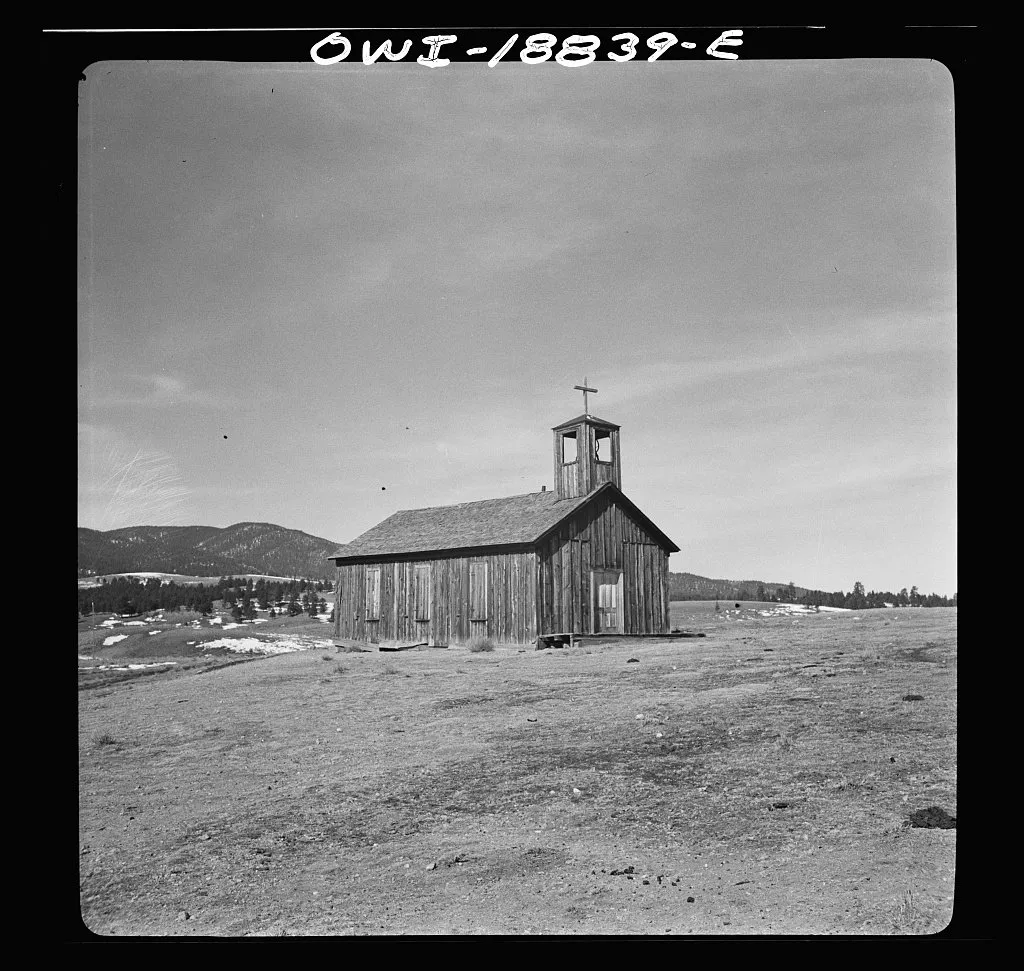
Today Elizabethtown is a quiet scattering of ranch homes along NM 38 in the north end of the Moreno Valley, between Red River and Eagle Nest. The stone wall of an old boarding house still stands, and on the hill above, the weathered stones of the cemetery mark the miners, merchants, and families of the rush. Drive the Enchanted Circle slowly past that hill, and you’re looking at the place where New Mexico’s first great gold rush wrote its opening chapter.
Planning a Red River getaway? Book your stay at the Claim Jumper A-Frame 6
