Before the ski lifts and the motorcycles, Red River was River City — a rowdy gold camp perched at 8,750 feet in the Sangre de Cristo Mountains. Oral history says the town was founded on July 3, 1895, by Colorado miner Edward I. Jones and the Red River City Town and Mineral Company. It took its name from the stream running through it, which turns red with silt after heavy rains.
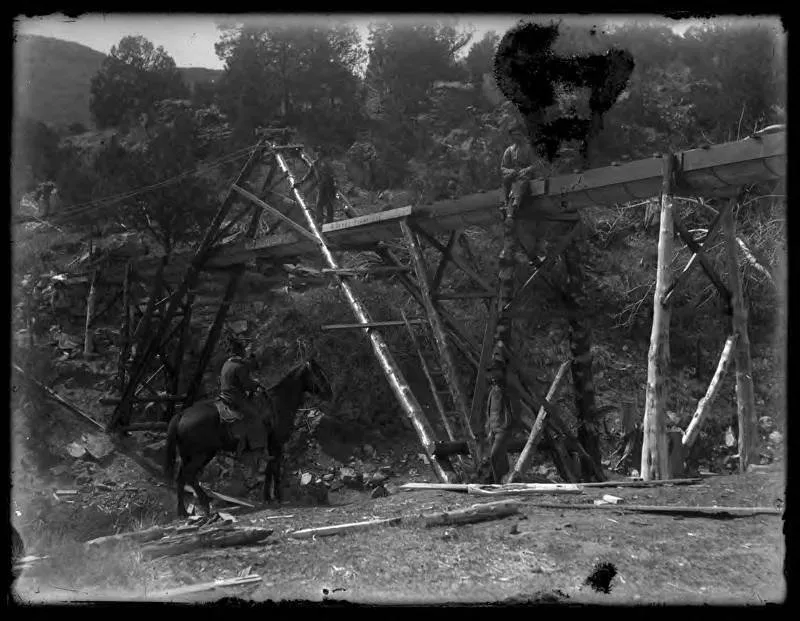
The valley was not empty before the miners came. For generations it was the summer hunting ground of the Ute and Jicarilla Apache, and fur trappers mapped its streams in the early 1800s. Then gold drew miners over from the Moreno Valley diggings, and the boom was astonishing: by about 1900, some 3,000 people lived in Red River City, served by 15 saloons, four hotels, two newspapers, a hospital, a sawmill, a school, a barbershop — and a lively red-light district.
It did not last. The gold and silver veins proved costly to work, investment money dried up, and miners drifted off to richer strikes in Colorado and Alaska. By 1905 barely 150 souls remained, and the surrounding mountains filled with abandoned cabins and silent mine shafts.
But the town refused to die. Word spread that Red River was a perfect escape from the Texas summer heat, and the old mining camp began reinventing itself as a mountain resort. The Little Red Schoolhouse, built around 1915-1916 to replace a log schoolhouse lost to fire, educated generations of local children before being moved to its present spot behind the public library in 1999; today it houses the Red River Historical Society. The town incorporated in the early 1970s.
Walk Main Street today — lined with hotels, restaurants, and curio shops along NM 38 — and the Old West is still there in the bones of the town. The gold rush gave way to the tourist rush, but Red River is still, at heart, a boomtown.
Planning a Red River getaway? Book your stay at the Claim Jumper A-Frame 6
